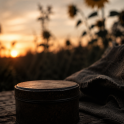
The tin was rusted at the seams, lighter than a slice of bread, and it was the only thing in our house that survived being sold twice. My father tried to trade it for kerosene the year the mines closed. My uncle tried to trade it for train fare the year he left for the city. Both times, my grandmother walked to wherever it had gone and walked back with it tucked under her cardigan, saying nothing, as if she'd only stepped out to check the mail. Inside were three hundred and twelve sunflower seeds — "small suns," my grandmother called them, waiting for permission to happen. I know because I counted them once, furious, certain she loved them more than she loved me. That was the winter the money changed its face twice and was worth less each time it did. We ate what we grew and grew less of it every year. I was nine, and I thought my grandmother was cruel for refusing to eat the seeds the week we lived on borrowed flour. "Why won't you just eat them?" I asked her, when hunger made me brave enough to accuse her outright. She didn't look up from her mending. "Because they are not seeds, Ana. They are next year." "Next year won't feed us tonight." "No," she agreed. "Tonight will have to feed itself." The neighbors thought grief had loosened something in her. My grandfather hadn't come back from the border two winters before, and grief does strange things to people, they said, twisting their dish towels tighter than they needed to. Mrs. Kovač told her plainly that a woman alone could not afford sentiment. My grandmother only smiled and offered her a cup of the tea that wasn't really tea — just hot water with a memory of mint in it. When the frost broke, she didn't plant potatoes like everyone else. She walked to the far end of our field, where the soil was too full of stones for anything sensible, and planted all three hundred and twelve seeds in a slow spiral, murmuring under her breath the whole time. I thought it was a song. It was her counting, so she wouldn't crowd them. Everyone else spent that summer arguing over turnip yields. Our spiral grew green, then rough, then taller than my shoulder, then taller than my father, rattling like paper in every wind that came down from the hills. I stopped being angry sometime in July, though I never said so. I told her the stalks were good windbreaks instead, which also happened to be true. By September we had forty sunflowers taller than the church door, heads heavy and dark, ringed in gold: a field of small suns, finally ready. My grandmother cut exactly enough seed for our own winter and set the rest aside in paper twists. Then, before light, she walked to Mrs. Kovač's gate and left one there without a note. I followed her, ten years old and outraged that we were giving away food when we lived on turnip peel ourselves. She left twists at six more gates before the village woke. At the seventh, I finally understood. This wasn't generosity. It was arithmetic. Years before I was born, a harvest had failed badly enough that half the village had eaten its own seed grain to survive, ours included. Every year since, my grandmother had been quietly replanting what fear had made people swallow — one gate at a time — so no single winter could ever again decide a whole spring. She never once called it that. She called it "tidying the field." A year later, six gardens bloomed sunflowers instead of turnips — small, uneven copies of ours. The year after that, eleven — including, at last, Mrs. Kovač's, who never mentioned the seeds and never needed to. By the time I was twenty, the whole valley turned gold every August, and almost no one remembered why. A few of us did the counting. My grandmother is gone now. The tin isn't. It sits on my windowsill in a city she never saw, and every August I fill it with three hundred and twelve seeds — no more, no less — though I don't yet know whose gate I'll leave them at. I only know that somewhere, hungry and proud and certain no one is watching, someone is deciding whether to eat their future. I'd like to be the reason they don't have to.
She was ten years old the first time she understood that wanting something badly enough could make your hands shake. The acceptance letters didn't come like that. They came quietly, one after another, landing in her inbox like small answered prayers she hadn't dared say aloud. Twenty-three universities. Most of them said yes. She would read each one twice, then a third time, her lips moving slightly — making sure something was real. The Ohio State University said yes too. She printed that one. The visa eligibility letter arrived on an unremarkable Tuesday. She held it with both hands, edges creased where her fingers pressed too hard without realizing. For the first time in months, something in her chest unclenched. Then her father looked at her and said, quietly, almost gently: "If only you were a boy. Things would have been much easier." He was afraid. Any father would be — his daughter, alone, in a foreign country with no one beside her. But fear dressed as love still closes doors. She didn't drop the paper. She folded it instead, crease by crease, the way you fold something you don't know what to do with. Went to her room. Sat on the edge of her bed and stared at the wall until it blurred. Then she cried. Quietly. Girls who love their fathers learn early to cry that way — pressing the sound inward, keeping it small, not making it anyone else's problem. Her father had sold his car to fund the applications. Two thousand dollars. Gone — paid into fees and documents and the particular cost of chasing something enormous. She thought about that number for weeks afterward. Not with bitterness. With a grief that had no clean name. He had believed in her enough to sell something he loved. It still wasn't enough. Her teachers had been watching. Her friends had been waiting for the ending they expected. She'd been waiting too — had almost started packing in her mind. She had to unpick all of it. Watch people's faces rearrange into something careful and kind, which is its own particular grief. She sat for DTM instead. But she had spent her sharpest months chasing a different future, and the gaps showed up exactly where she needed them not to. She chose one university in the capital almost without thinking. Fate chose the capital. She packed anyway. She had always been the kind of person who packs anyway. The first morning there, she woke to an unfamiliar ceiling and lay still, listening. The sounds were wrong. The light was wrong. She had left a stable job — and been mocked for it. Left her best friends. Left her mother's kitchen, the specific smell of it. The friendships she'd left behind thinned slowly — message by message, until silence stretched long enough to mean something. She grew thin that year. Financially and otherwise. Some weeks she calculated meals the way she once calculated deadlines — carefully, no room for error. She was lonely the way only people who have always been surrounded can be lonely: acutely, constantly aware of the absence. Then she met her. A girl who didn't fix anything. Just sat with her in the difficulty like staying required no explanation. That kind of friendship doesn't announce itself. It just appears — and then you cannot imagine before it. She enrolled in accounting. Always wanted to. There was something in the order of it, the way numbers answered to logic, that steadied her. She built a routine. Then a life inside the routine. She called her mother more. That was the quiet revolution nobody saw. Distance did what proximity never could — made her reach, made her say what she'd kept folded up for years. Later had finally arrived. She is not the girl who held that letter anymore. That girl thought Ohio State was everything. This one knows it was a door — and when it closed, loudly, in a way she didn't deserve, she was pushed down a narrower path that led somewhere the wider one never would have. She found accounting. A friend who became home. Her mother, again. And slowly, without ceremony — herself. The version that existed before everyone else's expectations reshaped her. Some losses don't stay losses forever. What once felt like an ending slowly became something else—something I didn't have the words for at the time. My dream didn't disappear. It changed shape, and I learned how to live inside the new one.
It is hard to find a language more criticised, misunderstood, and occasionally mocked by speakers of other languages than English. Yet it is equally hard to imagine another language that has spread across the world and connected so many nations. English gradually became the language of business, families, distant lands, and increasingly, everyday life. People often complain about English. Too simple, too practical, too strange. The spelling makes little sense, the pronunciation seems to ignore logic, and half the world grumbles about it while still trying to learn it. I understand why. I did not begin learning English for love, literature, or travel. I began because I had no choice. At the time, I was running the Tashkent branch of ComputerLand, an American-Swedish computer training company. Every important programme seemed to speak English. Software manuals were in English. Business websites were in English. Computers, it appeared, had made their choice long before I had made mine. I already spoke several languages and assumed English would simply become one more. I was wrong. After Uzbek, the language of my childhood, Russian, rich and emotional, German, where words obediently sounded much as they looked, and French, soft and poetic, English felt oddly rebellious. The words were short, slippery, and impossible to trust. Letters refused to behave properly. Why write one thing and pronounce another? I tried grammar books. I memorised vocabulary. Progress felt painfully slow. Yet somewhere in the background, another teacher entered my life. Humour. At first, British humour made little sense to me. Nobody explained the joke. People smiled politely while I sat wondering whether something important had just happened. Then everything began to change. Humour began helping me learn. I started watching short comedy series in English. The characters misunderstood each other, mispronounced words, made mistakes, embarrassed themselves, and somehow survived. More than survived — they laughed. Slowly, I realised something liberating: saying things incorrectly could sometimes be funny, even charming. One imperfect sentence would not destroy the world. For the first time, I stopped being afraid of making mistakes. Then one day, someone told me a joke about eleven couples from different countries stranded on a desert island. Each nationality behaved exactly as expected. The Russians somehow found vodka. The Japanese began planning a factory. The Welsh broke into song. The Germans discussed the economy. The English, however, did nothing. Why? Because they had not been introduced. I laughed far too late, after everyone else. But something shifted in me. Suddenly, I understood that English was not simply a language. It carried a culture inside it. Restraint. Distance. Dry humour. Rules that nobody explained aloud. The joke taught me something grammar books never could. Language was not only vocabulary and verbs. It was personality. Years later, after moving to New Zealand, English continued to surprise me. I learned that “not bad” could actually mean excellent. That invitations were sometimes politeness rather than plans. That silence did not necessarily mean coldness. Little by little, English stopped being merely practical. It became the language in which I slowly rebuilt my life. It became the language that brought me to the people who would change my life and become my family. The language in which I dared to imagine new possibilities for myself. Back in Tashkent, I had a dear friend with a little grandson named Ilyashka. At the time, I was preparing to leave for New Zealand. My friend and I spent hours talking about visas, plans, fears, and this distant country where I was about to begin a completely new life. The boy listened. Then one day, he announced: “I want to go to New Desire too!” The adults burst out laughing. He had simply transformed a country he could not yet understand into something warmer and closer to his own imagination. Not New Zealand. New Desire. The name stayed with me. Because, over the years, that is exactly what New Zealand became. A land of new desires. A place where I began again. A place where I learned to write in English, publish stories, write novels, and slowly discover new parts of myself. Eventually, the child's little mistake became the name of my English-language website: New DesireLand, or Land of New Desires. It is more than a website. It is a small literary world I created in this beautiful language, where my stories, essays, travels, and dreams have found a home. Language gives us more than words. Through jokes, misunderstandings, and small accidents, it changes the direction of our lives.
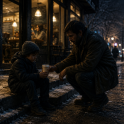
Night slipped into the city quietly, almost unnoticed. The streets filled with the thin breath of cold, wrapping everything in silence. It felt as if the city had held its breath and paused for a moment. Only a small café on the corner stood apart from that stillness. Inside, soft yellow lights spread warmth across the walls, and the aroma of freshly brewed coffee invited anyone in. Everyone there was lost in their own world — some staring at their phones, some drifting in their thoughts, others simply passing time. I was one of them. Just an ordinary night. Just an ordinary person. Until he walked in. The door opened slowly. A wave of cold air cut through the warmth. Behind it stood a man. It felt as if he had brought the cold in with him. A thin coat hung loosely on his shoulders, his worn-out shoes carried the dust of long roads, and the exhaustion on his face was deep enough to make one's heart ache. He did not belong here. As if this warmth was not meant for him. He paused by the door for a moment, looking around, as though unsure whether he even had the right to stay. Then, slowly, he stepped toward the counter. “Just a cup of hot water, please…” he said in a low voice. The words were simple. But the need behind them was impossible to ignore. The barista hesitated for a second, then silently handed him a paper cup. The man thanked her and moved to a corner. He held the cup with both hands — not as if to drink it, but as if searching for life within it. I found myself watching him. Suddenly, the coffee I was drinking felt strange. Its taste had changed. It even felt unnecessary. Something stirred inside me. I stood up. “Another coffee,” I told the barista, then lowered my voice. “For him.” She looked at me, a quiet understanding in her eyes. She nodded, prepared the coffee, and placed it in front of the man. “This has been paid for,” she said softly. The man froze. “For me?..” he asked, as if afraid to believe it. She nodded. He didn't drink it right away. He held the cup gently in his hands, feeling its warmth. He closed his eyes for a moment, as if this was not just coffee, but a feeling he had long forgotten. Inside, I felt a sense of relief. “I did something good,” I thought. But life was not done teaching me yet. A few minutes later, the man stood up and headed toward the door. But just before leaving, he stopped. He hesitated for a moment, then turned back. He walked up to the counter again. From his pocket, he took out a few small coins. He rolled them in his palm. They were so few that even their sound seemed shy. “May I have another cup of hot water?..” he asked quietly. The barista looked slightly surprised, but said nothing. She nodded. The man carefully placed the coins on the counter, as if they were all he had. Then he took the cup and walked outside. I don't know why. But I couldn't take my eyes off him. Outside the café, on the cold stone steps, sat a small boy. He had pulled his knees close, making himself as small as possible. He was trembling — not only from the cold, but from loneliness. The man walked up to him. Slowly, he knelt down. And placed the cup into the boy's hands. “It's warm…” he said gently. “Hold it tight.” The boy lifted his head. His eyes widened. Not from the warmth. But from being seen. The man smiled — a quiet, simple smile. Then, as if nothing had happened, he turned away and disappeared into the cold. No one noticed. No one stopped. No one thought. Only me. I sat there, frozen. The coffee in my hand suddenly felt heavy. As if it was no longer just coffee. As if it had become something unnecessary. I had given from what I could spare. He had given what he himself needed. And in that moment, deep within the silence, a truth awakened in the deepest part of my heart— Kindness does not begin with wealth. Kindness is not born from comfort. Kindness is when, even in the cold, you are still able to give warmth to someone else.
She woke up earlier than the rest and prepared to be torn apart by circumstances. Bound by the hope of getting the best, she would spare no chances. That wealth was the only light was what she believed. The lack of pride and might never made her heart feel relieved. So she weaved unreal dreams with an imaginary thread of light. Luxury came with ease, she thought in her fictitious world. During one such sunset trudging as she was to home, A sudden splash of water made her wet. From a carriage, which had caused this, stepped out a young man handsome. Discomfort and apologies followed then. He offered a ride back home. Time? He didn't know it flew when. Admiring her beauty, his eyes simply shone. Unabashedly, to her he proposed, leaving her awestruck. How could she then remain calm or composed? Was it really beauty or sheer luck? A grand festival in the name of love, attended by the whole town. Where perfection existed in every line and curve. Immaculate were her jewellery and wedding gown. For someone who had slept on splintered floors, and a hut where dawn slipped in without asking twice, she was suddenly met with Ivory doors, chandeliers, perfumes and everything nice. But now the huge walls intimidated her. They swallowed her laughter every now and then. Her smiles were measured and movements choreographed. Luxury had become a merciless cage. Where the size of a morsel held more value than someone's hunger. Disappearing while being in the room was seemingly the norm. An invisible crown weighed her down. The diamond necklace was beginning to tighten around her neck. Now the gold and glitter made her frown. Was she losing it? No one would ever check. One dawn, she woke up earlier than the rest, and left the mansion forever. She had finally set out to meet the best. On cracked roads she ran, and breathed in open air. Where days and nights asked nothing of her. The Sun burned her body, but judged anyone never, is where she found her solace. Where pain and sweat felt like hers. A once despised lifestyle, she accepted once again. No longer was she attached to riches. She would remain scarred but awake. In that tiny house, she found heavenly joy, where it didn't matter if she was extroverted or coy.
The sun was dipping low when their sandals rested in the warm sand. Seren and Theo laughed as they ran along the empty shoreline barefoot, laughter rising like music. It was their honeymoon — ten days away from noise, from deadlines, from the world. The island had been their escape. Seren ran towards the cliff, her heart pounding louder than the waves below. She turned to Theo, laughter in her voice, “Catch me, Theo!” Theo chased after her, their joy rising above the waves as they reached the edge of the cliff. For a moment, it felt like the world belonged to them until they noticed five masked men behind the rocks closing in from the dark shadows. “Phones, Jewelry, Wallets. Hand everything!” one of them yelled. They obeyed. They handed everything over, trembling. The gun fired. The only sound. One flash. Seren fell off the cliff with the wound on her shoulder, the water catching her like an open mouth in a single violent breath. Theo reached out — too late. She was gone…The waves carried her through cold water and darkness to an unknown, untouched island approximately fifty kilometers away. Seren opened her eyes to blinding sunlight. The air smelled of salt. For a long time, she didn't move. No voices. No sign of life. But it was the quietness that frightened her most. She glanced down at the wound where the bullet had brushed past her shoulder. Seren tore a strip from her dress and tied it tight around the bleeding spot. She was still alive —waiting and listening. She felt misplaced, a fish out of water, lost in a world that didn't belong to her. Night came slowly, wrapping the world in darkness. The stars above were countless, distant, and utterly cold. She pretended she wasn't scared but her eyes told a different story. Hours passed. Hungry and weak, she scanned the silent island. Just when hope began to fade, she saw fruit trees, as if the island offered her mercy. Coast guards, divers and Theo searched for her for 3 days. No body. No trace. The sound of that single gunshot haunted him. On the fourth morning, a coast guard claimed “ Movement spotted near a small uninhabited island. Approximately fifty kilometers west.” Theo's heart stopped. He immediately rushed towards the rescue boat before anyone could stop him. “ Please…” he whispered, staring at the horizon. “Let her be here.” As the boat drew closer, he saw movement near the shore — a small figure sitting in the sand. “That's her,” he breathed. Before the others could drop anchor, he jumped into the water. “Seren!” he screamed, running toward her. When Theo reached her, he hugged her so tightly that she gasped. She pulled herself back gently. She looked up at him with confusion. Her lips parted, “ I … know you?” Theo froze. “Seren,” he breathed. “It is me, Theo. Your husband.” “I don't think I know you,” Seren said quietly, as though apologizing for it. Theo's throat tightened. The guards arrived — voices shouting, wrapping her in warm blankets, guiding her gently toward the rescue boat. At the hospital, doctors moved quickly, whispering to one another as they examined her. After hours of waiting, a doctor approached Theo. “She's suffering from memory loss, possibly caused by stress, shock, or the near-death experience. She doesn't remember much of anything.” Theo froze. “But… she'll remember, right? In time?” The doctor whispered. “Sometimes memories return. Sometimes they don't.” Morning came. Theo brought coffee to her room, whispering her name softly before stepping inside. The bed was empty. Blankets folded. Seren was gone. The window open. Panic struck like lightning but there was no trace — no footprints, no note, nothing.
Introduction Every particle in the universe has its place, and every event has its order. Creation began with the very first "script." Every invention and emotion takes shape as thoughts before they touch paper. We are made of writing—from DNA codes to the lines of destiny. Man is the most intricate masterpiece in the library of the universe. Every breath is a comma, every decision a new sentence. We are born to write, leaving indelible lines for the future. I. The Inequality of the "Starting Line" The book of life doesn't begin on the same page for everyone. Some start at point "100" with ready-made wealth; others start at "0" without even a pen. Is this a predefined "System" or a test of resilience? What matters isn't where the book began, but what is written within. Writing an epic of heroism from zero is more sublime than leaving blank pages from a hundred. We cannot choose our starting line, but what we write on that field is our own will. II. Human Nature: The Unchangeable "Code" Human nature is our internal law. I believe it is unchangeable. We don't learn goodness; we are born with it—the "signature" of the Creator. This world balances light and dark. Even "monsters" are characters in a script designed to test our virtue. The greatest art is to remain an "innate good person," regardless of the world's destruction. If our nature is gold, it remains gold even in mud. A writer must not change their style, no matter how much the world tries to edit them. III. Destruction and the Technological Trap Humanity is both creator and destroyer. In a world of "mega" and "premium," we lose our time and the meaning of life. Technology was meant to lighten burdens, but it has made us busier and distanced us from one another. We complete "tasks" but forget to "live." To reach spiritual maturity, we must slow down. If greed continues to prioritize profit over the soul, the world will end before our spiritual eyes truly open. True progress is returning to the value of human connection. IV. The Philosophy of Distance Society is a system of mutual benefit, but for spiritual survival, distance is essential. Helping others is a debt, but maintaining distance is mental security. Like letters on a page, meaning only emerges when there is a space (a gap) between them. Human relationships are the same: only those with healthy distance remain meaningful. We cannot abandon people, but we must ensure their chaos does not infect our nature. Solitude is the workshop where our script is refined. V. Destiny and Responsibility Being born a writer is a mission. It is about perceiving life with depth. My destiny is to witness injustice, remain human among "monsters," and leave these experiences as a "script" for future generations. We leave behind the "path of life" we have written. Others should read our scripts to learn how to remain good in a difficult world. We are the guardians of meaning. Conclusion Humanity may end before reaching maturity, but this is just a transition to the "next level." If we live worthily and keep our "writing" pure, we fulfill our duty. The Creator is the Supreme Reader waiting for the conclusion of a great work. We are the pen, life is the paper, and every step is a letter. Until the final page, let us compose every line with humanity, patience, and wisdom. Only what we have written—love and truth—will remain forever.
The nightwolves and shadows moved quietly. The forest creatures kept a watchful eye; when the wolves appeared, the winds howled, warning them of the grave danger approaching from the flesh-eating predators. “Quick, run and hide! The nightwolves are out hunting." The ground below rumbled as the animals ran helter-skelter. Oh, the animals rushed to escape the vile predators. Unfortunately, some were not lucky and got caught within seconds. Their screams broke the quiet of the night as they struggled to free themselves from the deadly wolves. However, in a swift strike, they were killed and devoured. The tall, dark shadows watched, delighting in the bloodied melee. The nightwolves were at their behest as they tore the poor animals apart. They left behind a trail of blood and a heavy stench of rotting flesh. The forest animals now lived in fear. The nightwolves grew in numbers and returned often to hunt for food. One morning, Tabby, the squirrel, ran to the King of the Jungle, Lion. He was worried sick about what was taking place. He ran between trees and foliage deep into the forest until he reached the waterfalls. He saw the lion resting on a rock nearby. Lush verdant vegetation created a magical facade around the waterfalls, while the sunlight danced on the waters trickling below. “What blissful haven!” Tabby was envious. His part of the forest had once been as blissful, but not anymore. The nightwolves prowled the area often and killed many of his friends. He had to find a way to eliminate their threat. The King of the Jungle sat up as the squirrel approached him. Tabby bowed in respect. The clouds shifted in the sky above, blocking out the sun. A sudden gloom overcame them. “Ah, Tabby! What brings you here? It's been a while,” the lion greeted cheerfully. He noticed Tabby's worried face. “What's the matter?” His voice echoed through the forest. Birds flew from nearby branches, eager to hear what Tabby had to say. A deer perked its ears. “It must be important,” it opined. “Your Highness, the nightwolves have been terrorising our part of the forest, killing the animals and coming back each night to hunt for more.” “The nightwolves and shadows?” Lion demanded to know in an angry tone. He thought for a moment. Tabby's habitat was once renowned for its peaceful ambience. A great sage had lived in the resplendent environment. When he died, his soul returned to live in his prized habitat. “Don't worry, Tabby,” the lion assured him, “The Enchantress will get rid of the nightwolves for us.” “The Enchantress?” Tabby asked, confused. He had never heard of her before. The Enchantress was the daughter of a deposed King whose reign ended abruptly when an avaricious King seized his throne. The old King had fled into the forest. There he fell in love with a liminal being—a beautiful spirit incarnate who lived among the will-o'-the-wisps. The Enchantress was their firstborn and possessed her mother's magical powers. Lion related how she had once destroyed a fire-breathing dragon. Her melodious voice made the feared creature fall in love with her, and, lovestruck, he met his fate when she shot him with an arrow between his eyes. “Hurry, let's not waste any time,” Lion said. “She will destroy the nightwolves for you.” Lion offered Tabby a ride on his back as they hurried there. The birds followed discreetly, gliding on graceful wings of flight. The Enchantress was sunbathing with the mermaids by the riverbank when they arrived. As the visitors approached, the mermaids disappeared deep into the river. Their tails created a mighty splash as they dived. “Ah, Your Highness. What brings you here this mid-morning? And who do you carry on your back?” the Enchantress greeted with good cheer. Tabby was speechless when he saw the Enchantress. Her incredulous beauty astounded him. “This is Tabby from the other side of the forest. The nightwolves are attacking his habitat every night. We need your help to stop them from killing all the animals there.” Lion replied. “The nightwolves are protected by the evil shadows,” the Enchantress informed quietly. “The moon will be out tonight; I will entice them with a song. Then, strike them dead as I did with the dragon.” As darkness fell over the forest that night, the moon appeared to gloss over the clouds. The Enchantress began her hypnotising melody. Hearing her, the nightwolves stopped in their tracks. “Who's that singing?” The wolves questioned. The shadows hurried ahead of them in search of the soulful voice. They saw a beautiful woman on a cloud of mist under the moonlight by the mermaid's stream. The magic of her voice enticed the wolves to fall in love. Filled with rage and jealousy, they began to fight over her until the entire pack lay dead at her feet. Tabby and his friends were finally freed of a deadly menace. The forest was at peace once again. The End.
Ten-year-old Diwa sat folded into the quiet corner of her room with her back pressed against the cool, unyielding wall as if she needed something solid to lean her small world against. In her hands, two dolls dangled, one in each palm. She lifted them gently and her lips parted without sound, shaping the words she wished they could speak. Diwa didn't like making noise. Not because she disliked her voice, and not because she was shy. Simply because silence was the safer option. “PUTANGINA! GAGO KA?” Diwa froze. The dolls slipped slightly in her hands and a tight feeling bloomed in her chest. She didn't think. Her body moved before her mind did. She set the dolls down with trembling care and pushed herself up from the floor, leaving the wall that could no longer anchor her. Diwa was scared, but only the words scared her. She wasn't scared to walk towards the sound, nor was she scared to help her mother. She creaked open the bedroom door and saw what she was used to seeing. It didn't happen every day, but it happened enough for Diwa to know her “routine”, the one she never named but had memorized in her bones. She slipped through the doorway and rushed forward. She grabbed the nearest pillow with both hands and darted towards her mother, holding it up like a fragile shield. It wasn't much, but it was what she had learned to do. Diwa wasn't the type to fight back. She didn't have the confidence to raise her voice or her hands, especially not against her own father. But it wasn't only the lack of confidence that held her still, it was belief. Belief that her father wasn't truly like this, that he didn't mean to be. That the man behind the fists and violent words was someone gentle, someone she could someday have a real relationship with, like the kind all her friends seemed to have without trying. And despite everything, she still loved him. Despite the cruel words, the sharp corrections or the way he struck her hands with the edge of a pencil whenever she wrote the wrong answer. She still opened her math books with hope, reading her science chapter carefully hoping to see a once in a blue moon smile, and a soft, “Good job, Diwa.” It never came. Now, Diwa was seventeen. Her relationship with her father hadn't gotten much better but it hadn't gotten worse either. She was applying to college now, a milestone she had imagined would feel freeing. But there was one problem, Diwa didn't want to major in STEM like her father demanded. She sat with that truth for weeks, the question pressing her mind, How do I tell him? Do I even tell him at all? But Diwa had a stubborn mind, one that refused to spend the rest of her life trapped into her father's idea of a “perfect child.” So she told him. “I want to major in English.” The outburst was immediate, exactly what she had imagined would happen. “I didn't raise you like this, anak.” Surprisingly, Diwa remained calm. “Why can't you be more like your cousins?” he snapped. “They do what they're told without being asked.” Diwa steadied herself with one breath, then a second, her frustration slowly easing. “Every child has their own capabilities,” she finally said. “Their own desires. Their own dreams.” She held his gaze. “And if you're so fond of people who aren't your children, why have children at all?” She paused, letting the weight of her words settle. “If you want something you can control so badly, then breed horses. Why have children?” Her father didn't say another word. Diwa turned and left the house, her steps echoing in the hallways she had known for all her life. Weirdly, she felt like she had “won”, even though she now had to face college tuition and finding some sort of shelter on her own. She knew life would get impossibly harder after cutting off her only source of family. Happiness had seemed unreachable with no money, no home, no freedom. But maybe that was the point, to take the first step toward a life that belonged entirely to her. With no hope, she reached out to friends she hadn't spoken to in months, due to being locked in her home under study and expectation. Unexpectedly, they welcome her in. Diwa was surprised at how forgiving people could be. They welcomed her back as though no time had passed, as though distance and silence could be erased with simple kindness. For the first time in years, Diwa also got to visit her mother's grave. Forbidden for so long, she now stood before the moss-covered stone. Strangely, she didn't feel sadness, only relief. Relief for herself and her mother. Both had escaped the “hell” they'd been trapped in. Reconnecting with friends and meeting new people, she discovered life brimming with possibility. Diwa even found love, a guy named Max, who reminded her the world was bigger than fear. She had left the cage, the mold and for the first time, she felt the exhilarating truth, she belonged to no one but herself.
Whenever undertakers show up people always try to avoid contact as if they bring death or something so growing up i thought death has to be a body six feet under, first time meeting death was grandpa's death all I remember is mama crying, aunt on the ground and people all over the place wearing black like ALOT surprisingly they were yapping and acting like its an occasion to catch up like nothing happened ,I was a bit confused why do you show up if you really don't care? two years passes and here we meet again this time with dad got a call at school to go see dad at the hospital same scene all wearing black but this time they were all crying as I entered on dad I saw him but it didn't feel like him he was so cold like he was really soulless fear found me that time i got out of the room got out away all what i could say that i am ok, i went to the only place where i knew i will not have to deal with it to the pool spent there all day from waking up till i go home to bed and with my sister of choice it felt like nothing happened. nationals coming i trained harder than ever as every time I entered the pool I swam as sharks were chasing the faster i go the more silence i had tired body yes but muted mind just a week before my race got chickenpox sitting alone between those 4 walls felt as a mice trapped with a cat that is trying to kill him my mind was merciless blaming me for everything i couldn't sleep for 3 days itching body crazy mind felt like that this my end till my girl stepped in and helped and helped me realize that its ok nothing happened because of me, days passed and as i got better i was offered a job as swimming coach accepted with no hesitation chlorine smell is back in my hair this time I am the mentor ,that was the best time of my life. That friend we started talking less but that's ok that how it have been around us since childhood we both knew as we meet it will be like we never left or at least that's what i thought as she started ignoring me something felt wrong the more i try to approach her she runs new semester started I saw her at school went to talk to her she ignored me again. I really don't know what did I do? I kept texting , calling ,sent her a video of younger us saying how we will be together forever she saw it and then responded with a react after 3 days, that when i knew she is no longer the same person found her at school after that hanging with girls she used to yap how much she disliked them I felt real betrayal how can she even do that to me I trusted her as a family even more she was more than blood to me and I was a part of her family too! that's a betrayal you forgot 15 years? crying laughing everything together and for what I really don't know what happened as time passed I drown myself in work but that wasn't even powerful enough I don't miss her at midnight i missed her in the most crowed places and in my biggest achievements she was missing her spot was empty and she is the only person I really want by my side . As I trained more swimmers there were grandma's who came to train as there grandchildren watched , introducing kids to the water and seeing the hunger in young swimmers there, sprinting with my whistle , they think i am the one who taught them something new but they are the ones who came to me with wisdom every swimmer has a story and a lesson for me to learn specially those adults . I finally reached peace and that I need to let people die stop chasing not only those who are 6 feet under put in by undertakers but also those who breath i realized the girl i knew is dead so I have to grieve it and honor our memories that new girl is some one i don't know anything about as she don't either soka my dog just died months ago she was my last shared memory with dad she went to be there with him and the girl I never imagined she won't be there to get me out or i won't be there in her wedding as we dreamed wasn't there. something I learned too that when someone dies you don't try to bring them back cause they will come as a ghost or a vampire and from we knew from drama they aren't much friendly(except if he was Niklaus Mikaelson of course) people are stages in life god send them to help you through something and then leave ,same thing with you .even if you thought they will stay forever; enjoy the moment while you can and make peace with death it means someone's message is delivered as all I said hurt but it developed my character maybe god took them away cause they won't fit in the next chapter it doesn't matter if they died in a grave or in life make peace with yourself as that's the only one who is not just a chapter its the hero of the story love him so you can make a rememberable character out of him. True death happens when you get forgotten.
We have been going a long way; Our past was filled with ruthless wars. It was such a horrible journey That silenced innocent babiesʼ' laughter. But now, our world is tranquil; We are to live those half-dreamed lives. Now everything is just, everything is equal— Our goal is just to thrive. Undoubtedly, we have to make amends. You are building good lives for us, Yet we have a plea - hear our laments O keepers of the nations, We donʼt want battles over wealth and lands. Letʼs reunite again, As if there had never been a war. Let holidays begin, As our hearts have never felt sorrow.
The interplay of thunderstorm and lightning continued. It had been raining cats and dogs since the morning. Although the clock showed that it was just half past eleven in the morning, what seemed through the large glass of the only french window in the big room was a dark sky, filled with dark and monstrous clouds. Murky weather indeed. Raindrops trickled down the huge windowpane, occasionally making little thumping sounds in the background like "tip, tip, tip!" From the window, I could see the silhouette of the mountains, that were situated at a distance. Few mountains were blue in colour, few appeared black and the rest appeared greyish in colour. Then there were trees, clustered into what appeared as mini forests. Those mini forests were one large, dense forest if clubbed together. Picturesque indeed! Definitely a painter's delight. An easel, a paintbrush and some colours and you were ready to go. The room was exceptionally bright and well- lit. The four corners of the room had four beautiful aroma dispensers, dispensing what was sensed but the olfactory nerves as a rosy fragrance. The walls were tastefully decorated with paintings that represented various cultural aspects of different regions . Few were abstract in nature and few ethnic. From the centre of the ceiling, hung a medium- sized chandelier that radiated a yellowish- orange light. Such mesmerizing was the beauty of the chandelier, it seemed like the crystals were real diamonds, refracting and reflecting brilliance. A tall, golden flower vase in one corner and a few other exquisite showpieces adorned the room.In the middle of the room, was a large, royal looking sofa set, cushioned with peach and red coloured material that seemed extremely cozy. And there she was. Lying on one of the sofa chairs, with her legs dangling from one of the armrests, she was reading a book with utter concentration. It seemed like an old novel, that had a brown jacket, a bit tattered from the corners, giving an impression that it had been already read a number of times before. At one point it felt like she was staring at the book blankly. Then all of a sudden she came back to reality with a jerk and turned the page. Immediately, she sniffed the page, by bringing the book close to her face. But I wonder, did it smell like a newly printed book really? Even after having been read so many times before? Or was it just a habit? Occasionally, she picked up a cup that was placed on the table nearby and drank freshly brewed, hot coffee from it. She drank it in sips. It seemed like she was in a relaxed state of mind. The outer wall of the cup sustained lipstick stains on it, giving an impression that she had applied some makeup on her face. The aroma of freshly brewed coffee and the rosy fragrance filling in the atmosphere proved to be a deadly combination for anyone to fall for the ambience that had engulfed the room. The thunderstorm, heavy rainfall, dark clouds hovering over the sky, the ferocity of the nature outside represented the chaos. On the other hand the room in which I saw her spending some beautiful moments with herself was a definition of calm. So peaceful. So quiet. One could decipher it to be the calm in the chaos. She wore a red gown and wore her hair open. The honey- brown coloured locks of her hair enhanced her beauty even more. With legs dangling from the armrest, she looked ethereal. The calm in the chaos was enchanting indeed. It was then, when lightning struck, followed by a terrorising thunderbolt. I woke up from my deep slumber, shaking and looking around, trying to regain consciousness. Panic- stricken, I sat up and checked myself to see if I was still unharmed. With the grace of the Almighty, I was just fine. I saw the cup of coffee lying on the table so I picked it up and sipped coffee from it only to find that it had turned cold by then. The book that I was reading rested on my lap. It was still raining outside and I could see the silhouette of the mountains. The rosy scent had by now drenched the atmosphere in itself completely. The girl in the dream? It was me indeed! I was the girl in my dream and all that I was dreaming was actually true. The red dress, the book, the coffee and everything else happening around were real. It was just one of those days when it was raining and the ambience was simply conducive to spend a great time with myself. Actually I had always dreamt of living a dreamy life like this. But since I was not always capable of providing myself with such luxuries financially, growing up, I manifested earning this life for myself, on my own. I have worked hard to provide myself with such a splendid life. This is the power of manifestation. I manifested it! She manifested it!
Entering the village of Hasdate, Romania, you can see a seemingly modern village with new houses, yards well tended to and paved roads. The modern look presents a sharp contrast with the few old and time-worn houses that remain, with old, patchy roofs and dirt floors that linger as the physical manifestation of the memory of a village that existed over 70 years ago. Underneath the new coat of paint, every house in this village carries the memories of the communist era Hasdate village. My grandparents lived in this village during the regime and experienced the highs and lows of lives as simple farmers. The story my grandfather tells me begins in his childhood home, in this house. Sitting in his room, with the old rickety TV buzzing in the background, I feel like a small child listening to big stories made all the more real by my grandfather's vivid recollections. In one of his earliest memories he is only 11. While I remember being 11 and running around with friends, screaming, laughing, kicking a ball and cheering when it passed our made up football field boundaries, his reality was different. “I remember I just finished 4 grades and my parents wanted to send me to 5th grade but I didn't want to go. I never liked school. And since I didn't want to go they said fine, we need a child at home too. We had land, cows, sheep and anything we needed. That's how we lived, me, my parents, my siblings; parents and children in the countryside in general. We lived off of what we sold from our cows and sheep.” he says. Life was difficult but unpleasant. At the beginning of the communist period the village was a place filled with agricultural land and small farms and many families lived off of what they could grow and sell. This lifestyle was soon to change. In the autumn of 1959 they made the CAP or The Collective with the regional headquarters in Hasdate. When the communists came after the war, the land the people in the village owned, their animals and gardens, were all taken from them and made property of the state. They took everything from them, built the stables of the CAP for the animals and only allowed the people working for them to own 15 areas of land for every working CAP member. People called it The Collective because of that. They allowed them to only keep one cow and up to 5 sheep. This is all they had left to make a living from. Many people envision their youth as more than just work, they see fun and new experiences, not ears hurt from the noise of machines and a tired body to take to work the next day while still thinking about the land you must care for to be able to eat, but that was the truth of the regime. I see my grandfather as he is today, tired but fulfilled and I wonder if maybe his heart could offset the toll the struggle took on him. I see his kind eyes, and his will to find the best in everything. Working the land and taking care of a farm came with its own difficulties. Part of what the people could grow and sell had to be given to the CAP. Fighting back was never a choice but the people still tried to before signing the cheese contract so they could protect the product of their hard work and the food their families often relied on. “One time when we were gathering the sheep, someone from the city hall came there, he is still alive today, I think, and he, the chief accountant and the CAP president insisted we had to sign a cheese contract,” he says. The people didn't want to hand over the product of their hard work and tried to fight back but in the end they had no choice. Sign or lose your job. Ilie Buiga protested the most at the time. “ 'Sir,' I said, ‘If it's mandated by law, show us the law and we'll do it and that's it.' They went inside and talked and when they came out the CAP president said ‘Someone here is going to lose their job tomorrow'.” He fought for what he cared for though, as he always does. “The thing with the communists is that they made our country free of debt but they completely neglected their people” he tells me. Despite the struggles of living in the communist regime, my grandfather always says that one of the good things they did was make it so that all children, rich or poor could go to school. He had a big family, six siblings to send to school. Even though he chose to stay home to care for the land and the farm, another six children were not easy to support in their education for his parents. Nowadays we often hear about the communist period in black and white terms. Either a good thing for the people that benefited from it or a horrible thing for those who struggled. Ilie Buigas' perspective shows good and bad parts in a life filled with hard work as well as joy in the midst of struggle. There were years of struggle but also love, first for his family, then for his village and land, and then for his wife, children and grandchildren. This is his story, from the beginning of an era, to the start of another. „That's how 78 years went by.” he says.
There are seasons of the soul that feel like eternal winter, where time collapses into a cold grey blur, and breathing becomes less of an instinct and more of a chore. In 2023, I found myself buried in that season. Not beneath snow, but beneath silence. Beneath pain so loud it numbed me. I was in a hole so dark, I forgot what light looked like. So dense, I questioned if it had ever existed. It wasn't that I wanted to die. It was that living became unbearable, an uphill drag with no summit in sight. I was not tired of life. I was tired in life. And so, in a moment that felt both ridiculous and holy, I made a deal with the universe: “If I'm meant to be here, if I'm meant to have joy, love, and everything I ache for, then I'm going to survive this. If not, let me go.” The truth is, I woke up. Not gracefully, not peacefully. I woke up heaving and shaking and vomiting, not from divine deliverance, but from a body refusing to surrender. And in that mess, in that ragged breath I didn't ask for, I found a strange kind of clarity. The universe may be broken. But so am I, and we're both still here. This survival was not a miracle in the traditional sense. There was no beam of heavenly light, no choir of angels. Just a girl, a stomach full of regret, and a life stubborn enough not to end. But here's the thing about being shattered: it makes you porous. And in being porous, you let the light in. That moment of survival became a turning point. I decided that if I could wake up from that, if I could find breath after begging for silence, then I could find joy too. Not all at once. Not without clawing and scraping and crying again. But I could find it. And I did. Now I carry a truth so heavy and so sacred, it demands to be shared: You will get everything you want from this life. But first, you have to survive it. There is a specific kind of courage that blooms in the depths. A choice that cannot be made when everything is fine. It is the choice of someone who has seen the edge, tasted the bitterness of despair, and still says, “I will try again.” I see this bravery not just in me, but in so many others. People I love. People I've held as they sobbed. People who have buried mothers, carried the weight of identity in an unkind world, fought addiction, held hands through heartbreak, or just quietly waged war against their own minds. Survival is not glamorous. It's often silent. But it's holy. To anyone reading this, to the version of me who needed to read this, I beg you: Choose life. Not just for the promise of happiness or success. Choose life because you are a soul that the universe allowed to borrow flesh, to step onto Earth and feel everything. The joy and the despair. The heartbreak and the euphoria. The hunger and the fullness. You are not here by accident. And even if you are, even if you are an insignificant speck in an ever-expanding cosmos, then doesn't that make this even more magnificent? That from dust and stardust and mystery, you got to be here? Your life may feel small. But it's yours. And within it, you can do anything. That's not motivational fluff. That's metaphysical fact. You are a flame wrapped in skin. You are a thunderstorm pretending to be ordinary. You are temporary, yes. But that just means the moments matter more. So make it worth it. Make your existence a rebellion against the void. Laugh loudly. Cry openly. Make art that no one understands. Love hard, even if you get hurt. Rest. Rage. Dream. Begin again. And again. Because if the universe is broken, then you get to be the glue. And if you are still here, it means your story is not done. There is more. More you. More life. More love. Choose to see the light, not just at the end of the tunnel, but within yourself. You are not alone. You are not done. You are the unlikely bloom in the deep, dark soil. And you are growing.